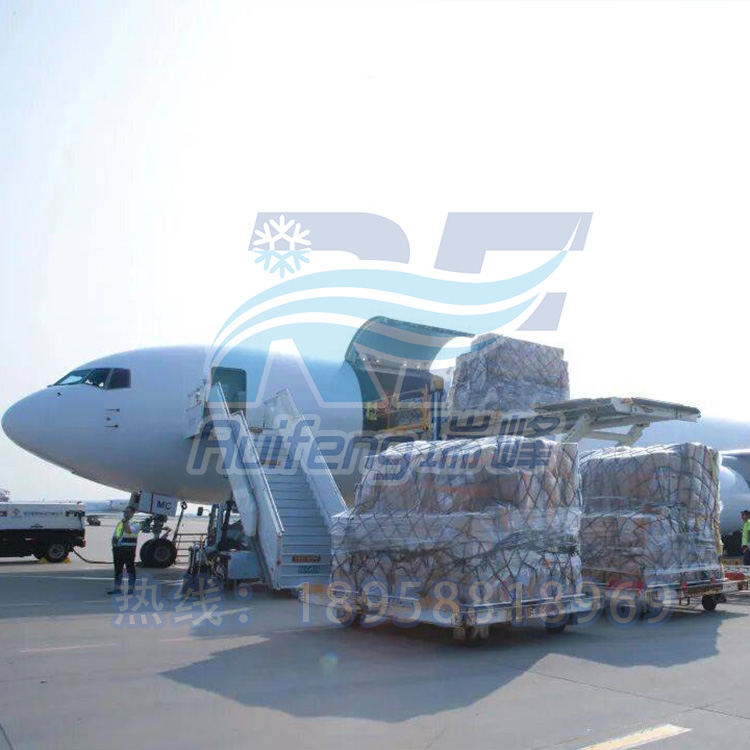



该项目位于京津冀地区,是中国北方经济规模最大、最具活力的核心区域。该地区属温带季风气候,夏季高温高湿,极端气温可达40℃以上,且持续闷热天气频发,对大空间作业环境的通风散热提出了极高要求。作为国家重要的航空货运枢纽,该货站不仅承担着区域内外高效流通的空运货物分拣、检测检疫、装卸机等核心任务,更是我国航空物流体系的重要节点,在支撑“空中丝绸之路”建设、提升国际航空货运能力方面发挥着关键作用。随着我国航空货运总量持续攀升、国际影响力不断扩大,对作业环境的规范化、人性化保障也日益成为现代化货运枢纽建设的重要考量。
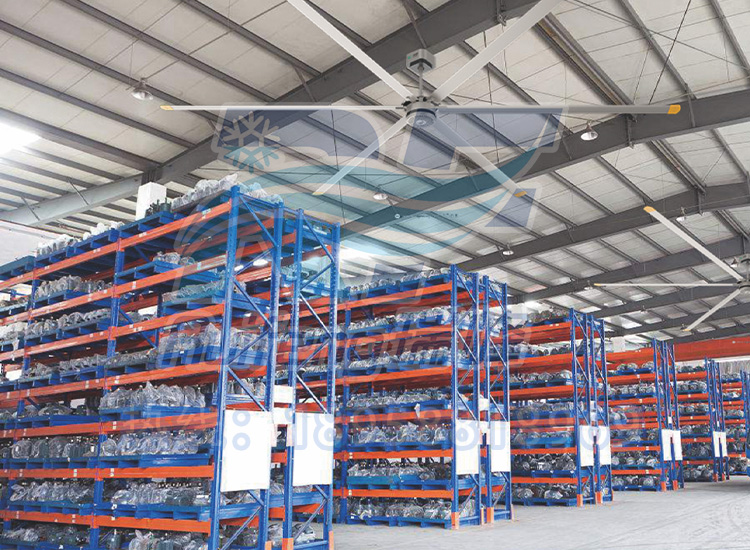
该国际货站及快件分拨中心的主体建筑为大跨度钢结构棚式结构,总面积超过2万平方米,挑高约17米。高挑空设计满足了大型安检设备、升降平台车等设施的作业需求,开阔的跨度为货运摆渡车辆提供了高效进出的通行保障。然而,这种高大开阔的空间结构在夏季极易形成热空气积聚,加之建筑围护结构隔热性能有限,内部作业区域普遍存在高温闷热问题,不仅影响一线作业人员的工作状态与健康安全,也不利于维持货物处理环境的稳定性。因此,迫切需要通过科学合理的通风降温手段,实现空间气流的整体改善。
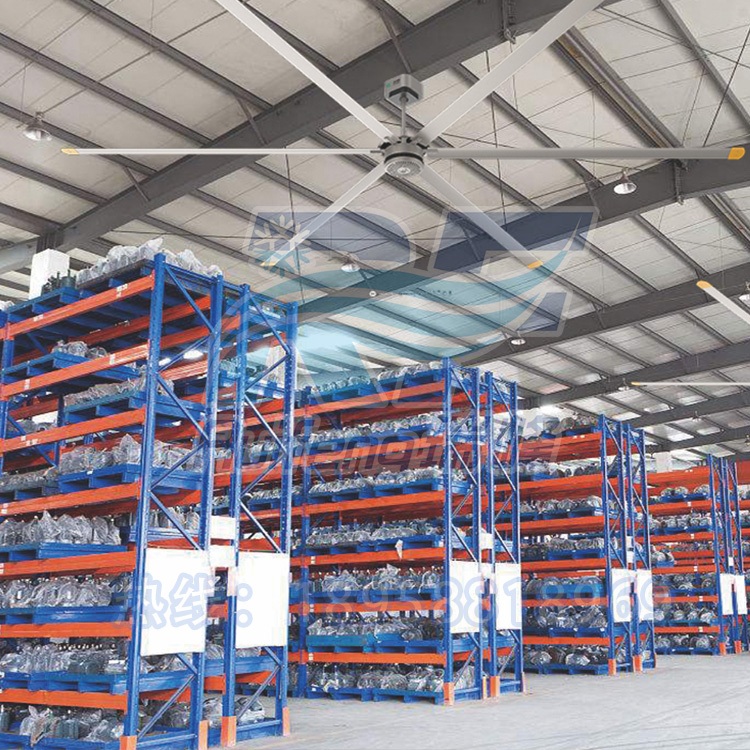
针对该项目大空间、高挑空、无须精准温控但需全面气流覆盖的特点,瑞峰方案设计人员综合考量了多项关键因素:一是京津冀地区夏季高温闷热天气多,通风系统必须能够有效应对长时间高负荷运行;二是库房面积超大、层高超高,传统空调设备成本高、能耗大、运行效果有限;三是货物周转过程中对温湿度并无严格要求,降温重点在于通过气流组织提升人体舒适度,而非精确控温;四是作业区域内人员、设备密集,气流分布需兼顾均匀性与安全性。基于上述分析,设计团队选用永磁工业大吊扇作为核心设备,依据不同型号扇叶的覆盖面积进行科学配比,合理布点,实现全区域覆盖。此类大吊扇采用永磁同步外转子电机直驱结构,较传统减速机驱动方式省去了机械传动部件,具备体积小、效率高、免维护的突出优势,尤其适合在长期运行、维护条件有限的高大空间中使用。扇叶采用机翼型与节能尾翼组合设计,结合仿生流体力学与空气动力学原理,可在低转速下驱动大量空气沿地面辐射状流动,实现覆盖面积最高达2000㎡,能耗却比传统吊扇降低35%以上,充分体现了“高效节能、定向覆盖”的设计思路。
永磁工业大吊扇的物理原理在于利用大直径扇叶低速旋转,以极小能耗驱动大面积立体自然风场,将建筑上部的积聚冷空气均匀下压,并与地面热空气形成有效对流,从而在空间内构建出持续的“自然风”循环系统。设备启用后,货站库房内部空气流动显著增强,作业区温度梯度减小,湿热滞留现象得到明显缓解。一线操作人员反映体感温度明显下降,长时间作业的疲劳感减轻,工作效率与舒适度均有显著提升。同时,由于设备运行平稳、噪音低,不影响作业区正常的设备操作与调度指挥。
瑞峰公司此次承接的航空货运枢纽货站分拨中心工程项目,不仅是对永磁工业大吊扇在超高大空间应用的一次成功实践,也进一步验证了该方案在物流仓储、工业厂房、体育场馆、展览中心等同样具备“空间高、跨度大、需气流优化”特征的多种场景中的广泛适用性。通过该项目,瑞峰公司进一步彰显了在超高大特殊空间及特殊行业要求下,对设备综合选型与方案设计的专业能力,能够精准匹配项目需求,为客户提供高效、可靠、节能的通风降温整体解决方案。
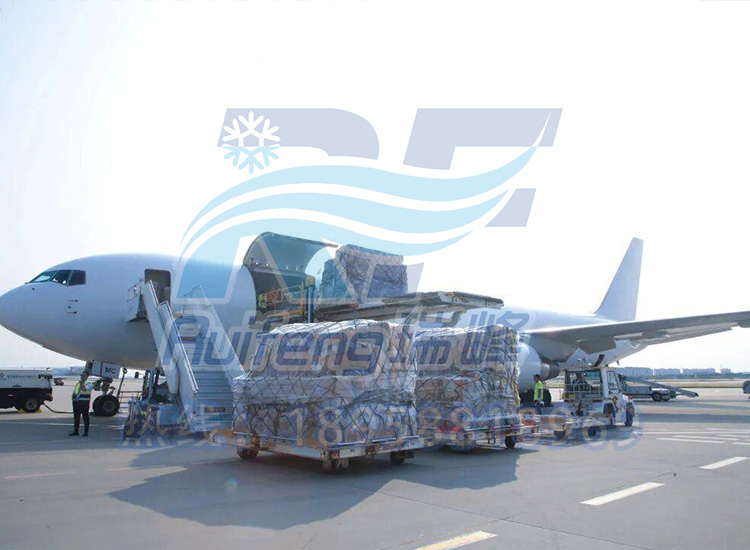
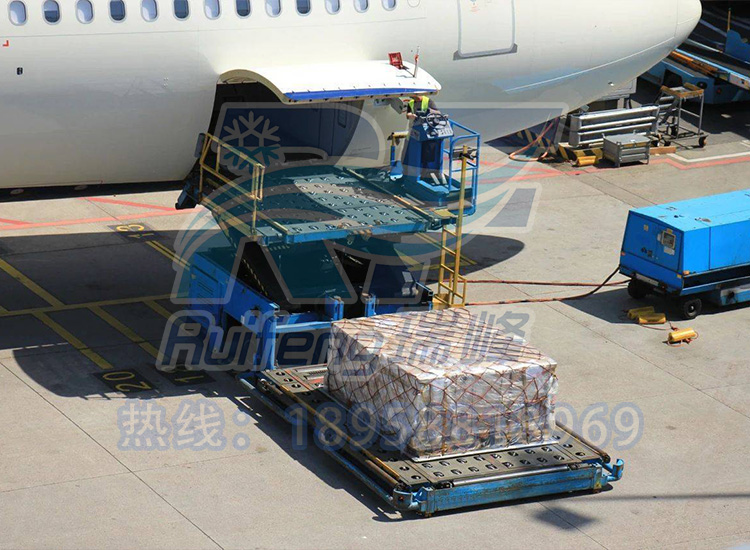
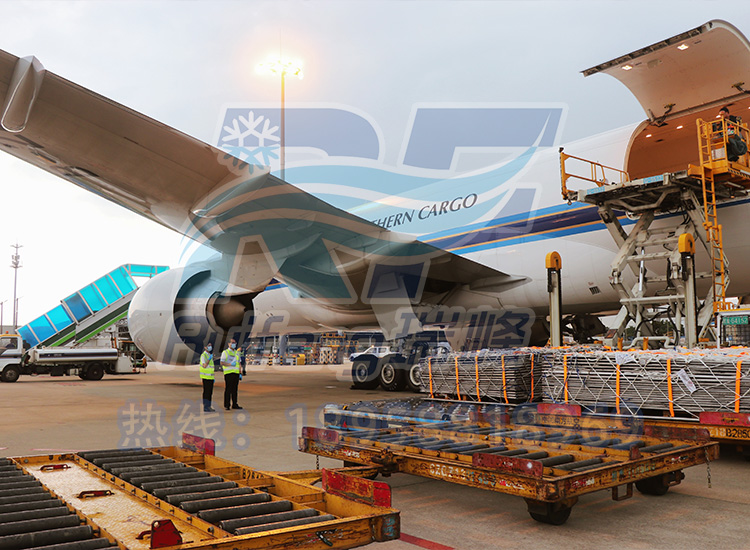
This project is located in the Beijing Tianjin Hebei region, which is the largest and most dynamic core area of the economy in northern China. The region belongs to a temperate monsoon climate, with high temperatures and humidity in summer, extreme temperatures reaching over 40 ℃, and frequent hot and humid weather, which places extremely high demands on ventilation and heat dissipation in large working environments. As an important national air cargo hub, this cargo terminal not only undertakes core tasks such as efficient sorting, inspection and quarantine, loading and unloading of air cargo within and outside the region, but also serves as an important node in China's air logistics system, playing a key role in supporting the construction of the "Air Silk Road" and enhancing international air cargo capacity. With the continuous increase in China's total air cargo volume and the continuous expansion of its international influence, the standardization and humanization of the operating environment have become important considerations for the construction of modern freight hubs.
The main building of the international cargo terminal and express distribution center is a large-span steel structure shed structure, with a total area of over 20000 square meters and a height of about 17 meters. The high and empty design meets the operational needs of large security inspection equipment, lifting platform vehicles and other facilities, and the wide span provides efficient access guarantee for freight shuttle vehicles. However, this tall and open spatial structure is prone to the accumulation of hot air in summer, coupled with the limited thermal insulation performance of building envelope structures, and the widespread problem of high temperature and stuffiness in internal work areas. This not only affects the working status and health safety of frontline workers, but also hinders the stability of the cargo handling environment. Therefore, there is an urgent need to achieve overall improvement in spatial airflow through scientifically reasonable ventilation and cooling methods.
In response to the characteristics of the project, such as large space, high altitude, and the need for comprehensive airflow coverage without precise temperature control, the designers of Ruifeng Plan have comprehensively considered multiple key factors: firstly, the high temperature and stuffy weather in the Beijing Tianjin Hebei region during summer, and the ventilation system must be able to effectively cope with long-term high load operation; Secondly, the warehouse area is extremely large and the floor height is extremely high, resulting in high costs, high energy consumption, and limited operational effectiveness of traditional air conditioning equipment; Thirdly, there are no strict requirements for temperature and humidity during the turnover of goods. The focus of cooling is on improving human comfort through airflow organization, rather than precise temperature control; Fourthly, the personnel and equipment in the work area are dense, and the airflow distribution needs to balance uniformity and safety. Based on the above analysis, the design team selected permanent magnet industrial ceiling fans as the core equipment, scientifically proportioned and reasonably distributed according to the coverage area of different types of fan blades, and achieved full area coverage. This type of ceiling fan adopts a permanent magnet synchronous outer rotor motor direct drive structure, which eliminates mechanical transmission components compared to traditional gearbox drive methods. It has outstanding advantages such as small size, high efficiency, and maintenance free, and is particularly suitable for use in tall spaces with limited long-term operation and maintenance conditions. The fan blade adopts a combination design of wing shape and energy-saving tail wing, combined with the principles of biomimetic fluid dynamics and aerodynamics, which can drive a large amount of air to flow radially along the ground at low speeds, achieving a coverage area of up to 2000 square meters, while reducing energy consumption by more than 35% compared to traditional ceiling fans, fully reflecting the design concept of "high efficiency, energy saving, and directional coverage".
The physical principle of permanent magnet industrial ceiling fans is to use large diameter fan blades to rotate at low speed, driving a large area of three-dimensional natural wind field with minimal energy consumption, evenly compressing the accumulated cold air in the upper part of the building, and forming effective convection with the ground hot air, thus constructing a continuous "natural wind" circulation system in the space. After the equipment is put into use, the air flow inside the warehouse of the cargo terminal is significantly enhanced, the temperature gradient in the operation area is reduced, and the phenomenon of humid and hot retention is significantly alleviated. Frontline operators reported a significant decrease in perceived temperature, reduced fatigue from long-term work, and significant improvements in work efficiency and comfort. At the same time, due to the smooth operation and low noise of the equipment, it does not affect the normal operation and scheduling command of the work area.
The air cargo hub distribution center project undertaken by Ruifeng Company this time is not only a successful practice of applying permanent magnet industrial ceiling fans in super tall spaces, but also further verifies the wide applicability of this solution in various scenarios such as logistics warehousing, industrial plants, sports venues, exhibition centers, etc., which have the characteristics of "high space, large span, and optimized airflow". Through this project, Ruifeng Company has further demonstrated its professional ability in comprehensive equipment selection and scheme design under the requirements of super tall special spaces and special industries. It can accurately match project needs and provide customers with efficient, reliable, and energy-saving ventilation and cooling solutions.

客服热线:18958818969
服务热线:13356130717
电子邮件:ruifeng0717@163.com
公司地址:浙江省温州市平阳县万全镇紫来创业园二幢
瑞峰官网:www.wzrfhb.com



长按屏幕识别二维码
打开手机扫描二维码