



The equipment in chemical fiber production workshops is densely arranged, and the spinning, extrusion, and drawing processes continuously release a large amount of heat. Coupled with the high airtightness of the workshop, heat and odors are difficult to dissipate naturally. In summer, the indoor temperature of many chemical fiber plants often exceeds 38°C. Industry data shows that when the workshop temperature remains above 35°C for a long time, high temperatures can also affect the stability of the spinning process, increase defects such as broken filaments and filament breakage, and raise the product defect rate. A scientific and feasible cooling solution for chemical fiber workshops has become a rigid necessity for chemical fiber enterprises to ensure production and improve employees' working environment.
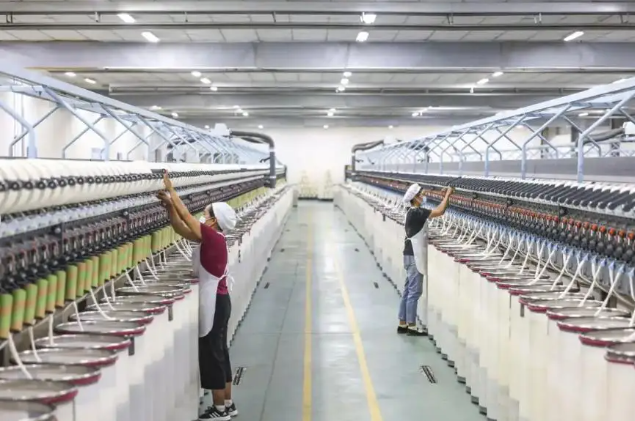
The cooling pain points in chemical fiber workshops are very prominent. Production equipment continuously dissipates heat, causing serious heat accumulation in the workshop. The workshop is highly airtight, and the spinning process emits a small amount of volatile odors. Ordinary window ventilation has very little effect. Some workshops have certain humidity requirements and cannot blindly use purely humidifying equipment. If traditional central air conditioning is directly adopted, the upfront investment for large-area plants is high, and operating electricity costs remain high, making it difficult for many enterprises to afford. The chain problems caused by high temperature and stuffiness should not be underestimated. Not only does the risk of employee heatstroke increase and the staff turnover rate rise, but heat accumulation also accelerates the aging of motors and spinning equipment, increasing the probability of equipment failure and downtime, bringing direct economic losses to enterprises.
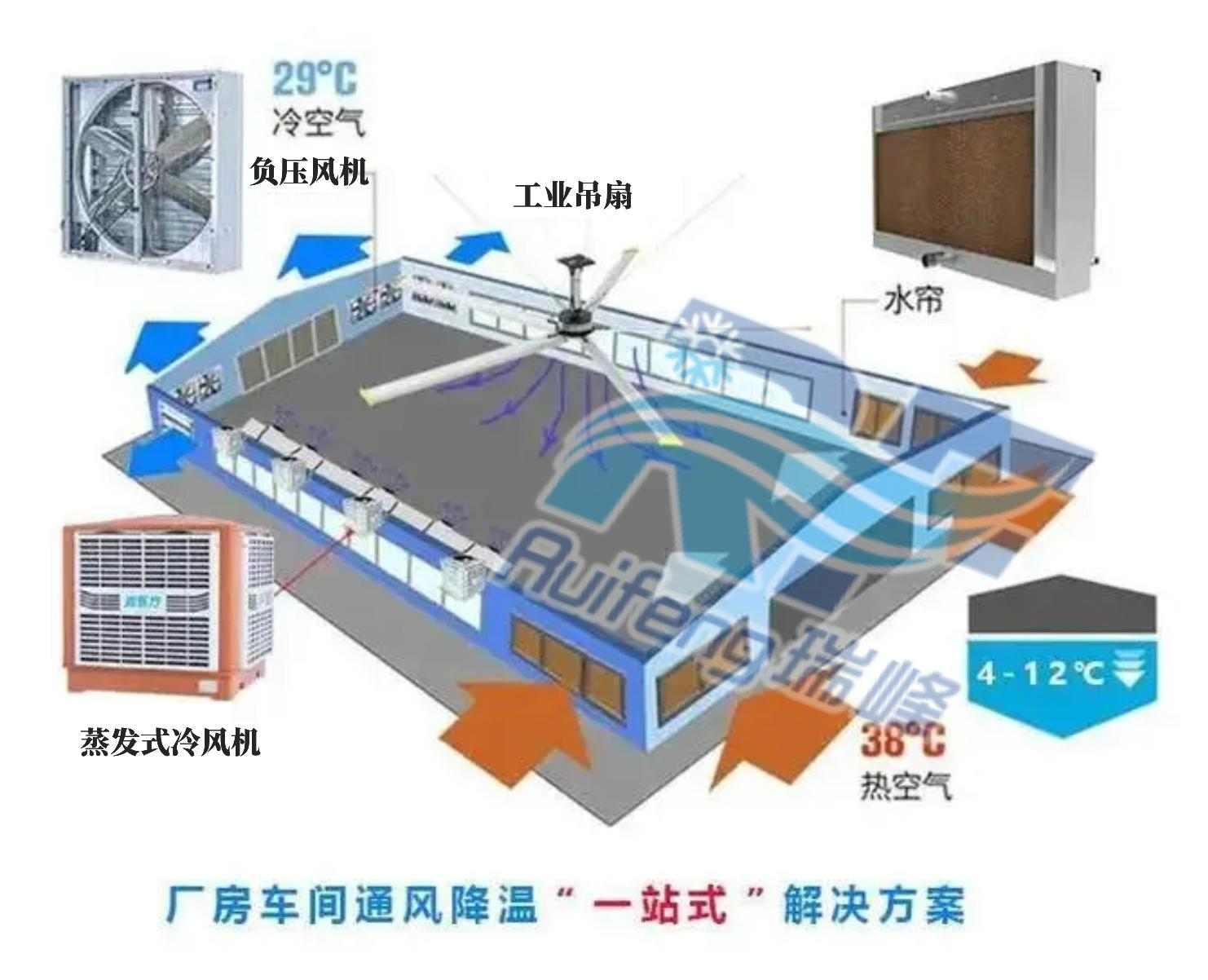
At present, the mainstream cooling equipment for chemical fiber workshops in the industry roughly follows several technical routes. Evaporative air coolers use the physical principle of water evaporation absorbing heat for cooling. In high-temperature environments, they can effectively reduce the supply air temperature by 5–10°C, while increasing air humidity and improving air quality. A single unit consumes more than 60% less electricity than traditional compression air conditioning. Negative pressure fans solve the problem of "air exchange" — chemical fiber workshops have dense equipment and generate large amounts of heat, so sufficient air changes are needed to discharge accumulated heat and odors. Production workshops with heat-generating equipment usually require 40–50 air changes per hour, while high-temperature production scenarios with pollution may even require 50–60 air changes per hour. They can also be combined with permanent magnet industrial large fans to strengthen internal air circulation. Industrial air conditioning is irreplaceable in precision processes requiring accurate temperature control, but the operating cost of fully covering a large space is relatively high, making it suitable for local or key workstations.
Of course, many factories also simply purchase and install equipment on their own, looking only at equipment parameters without conducting airflow planning based on workshop heat generation, airtightness, and local climate. This can easily lead to uneven cooling, incomplete odor discharge, and humidity imbalance. The equipment purchased may fail to achieve the expected effect. This also reflects the importance of choosing a professional industrial cooling equipment service provider. A professional service provider does not simply sell equipment, but conducts on-site surveys of working conditions, calculates heat load and air change rates, and provides a complete combined ventilation and cooling solution.
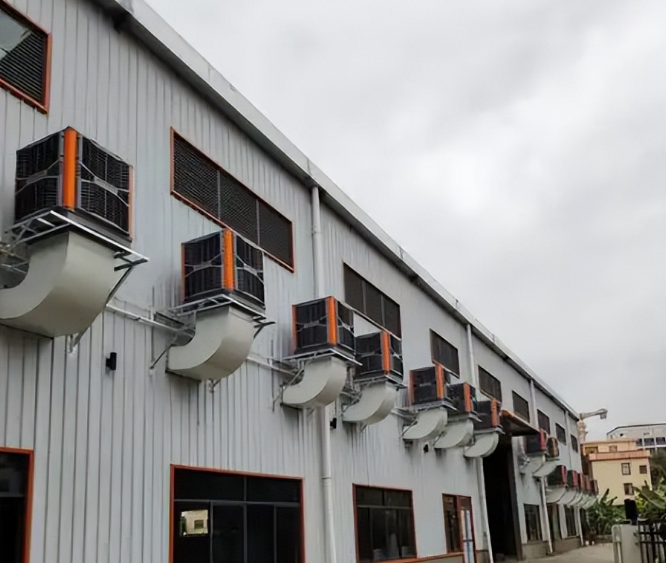 Wenzhou Ruifeng Environmental Protection Refrigeration Equipment Co., Ltd. has a real completed case at the Guangzhou Nansha Synthetic Fiber Plant. The chemical fiber workshop has compact equipment layout and large heat generation, and is located in a subtropical high-temperature and high-humidity environment. The workshop has low sensitivity to humidity changes. After on-site survey of the plant structure and heat-generating points, the Ruifeng technical team abandoned the costly full central air conditioning solution and adopted a chemical fiber workshop cooling solution combining evaporative air coolers and negative pressure fans. The air coolers were installed outside the wall, and air ducts delivered cooled fresh air into the workshop. At the same time, multiple negative pressure fans were reasonably arranged to directionally extract hot air and production odors, forming an organized airflow and ensuring the workshop reached the standard air change rate. Ruifeng Environmental Protection has accumulated project experience in ventilation and cooling across multiple industries, from synthetic fiber workshops to textile workshops, injection molding workshops, and precision machining workshops. Its solution design capability has been verified in different scenarios. After the renovation of the Guangzhou Nansha project was completed, the workshop body feeling dropped significantly, odors were quickly discharged, employees' working environment was improved, and the consistency of fiber product quality was ensured. Compared with traditional air conditioning, the overall project investment and later operating electricity costs were greatly reduced. Ruifeng Black Silk has in-depth cooperation with leading brands such as Xingke, Oupusi, Delong, and Naisida, and can provide one-stop services including on-site surveys, solution design, equipment supply, installation and commissioning, and after-sales maintenance for workshops in different industries, balancing cooling effect and enterprise cost.
In summary, the cooling solution for chemical fiber workshops cannot copy the general plant model. It is necessary to fully consider multiple conditions such as equipment heat generation, odor discharge, humidity, and plant airtightness. Simply purchasing a single piece of equipment can hardly solve all problems. Priority should be given to professional service providers with practical experience in the chemical fiber industry and customized combined ventilation and cooling solutions, so as to achieve the dual goals of workshop cooling and air exchange and odor removal while controlling investment costs, safeguarding personnel safety and product production quality. If you happen to be looking for a reliable industrial cooling equipment service provider, then choosing the right manufacturer is very important! Wenzhou Ruifeng Environmental Protection will create a professional environmental optimization solution tailored for you, and its "one-stop" service will save you from worries from product selection to installation and use. Interested parties are welcome to contact us at any time!