




Large-scale livestock farms face great challenges in environmental control all year round. They suffer from high heat and stuffiness in summer, and accumulated ammonia and moisture in winter and spring. Many farmers simply buy single fan units, which leads to insufficient cooling, persistent odor problems and severe stress reactions in livestock. Many farm operators want to tackle these troubles, yet there is no universal best cooling and ventilation equipment for livestock farms. A combined solution customized according to the shed structure, livestock breed and local climate is required to balance ventilation, cooling and deodorization while cutting costs and boosting efficiency.

Livestock farms encounter complicated ventilation and cooling pain points throughout the year. The internal temperature of pens can easily exceed 35°C in summer, putting livestock at high risk of heat stress. Statistics show that when the temperature in pig houses stays above 32°C for a long time, feed intake of livestock drops by 18%-25%, and growth slows down. In winter and spring, many farms close doors and windows to retain heat. As a result, ammonia, hydrogen sulfide and dust keep building up inside the sheds. Excessive ammonia concentration greatly raises the risk of respiratory diseases, and may even increase livestock mortality in severe cases. Semi-open and open sheds also struggle with large temperature differences between day and night and many dead-air zones. Some farmers purchase equipment online only based on technical parameters, ignoring shed structure and stocking density. Consequently, they fail to cool the shed down in summer or cause cold stress due to over-ventilation in winter, and the investment cannot bring expected production benefits.
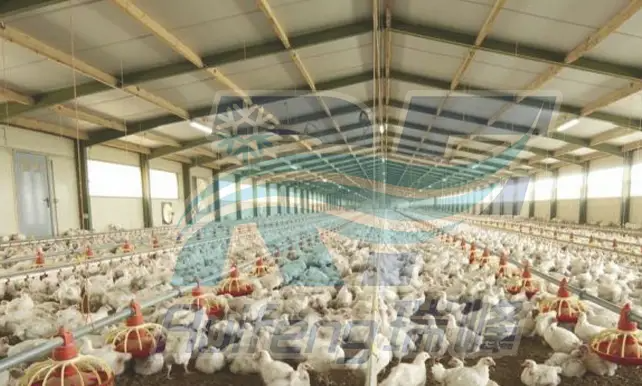
A wide range of livestock farm cooling and ventilation equipment is available on the market, and each fits specific application scenarios. Permanent magnet negative pressure fans deliver powerful exhaust to quickly remove hot air, ammonia and dust from pens. They are often paired with evaporative cooling pads to form an evaporative cooling system. Relying on heat absorption from water evaporation, this set is suitable for medium and large semi-open farms and can bring a perceived temperature drop of 5-8°C in summer. Integrated deodorizing fans combine ventilation, scrubbing deodorization and dust removal. They decompose ammonia through chemical liquid scrubbing and achieve an ammonia removal rate of 80%-95%, ideal for farms with strict environmental emission requirements or those near residential areas. Permanent magnet industrial large ceiling fans circulate air across the whole space to eliminate ventilation dead corners and balance temperature and humidity inside the shed. They are mostly used as auxiliary units together with other systems. In actual projects, multiple devices are commonly combined. The full set of ventilation, deodorization and cooling systems is configured based on environmental protection requirements and the airtightness of the sheds.
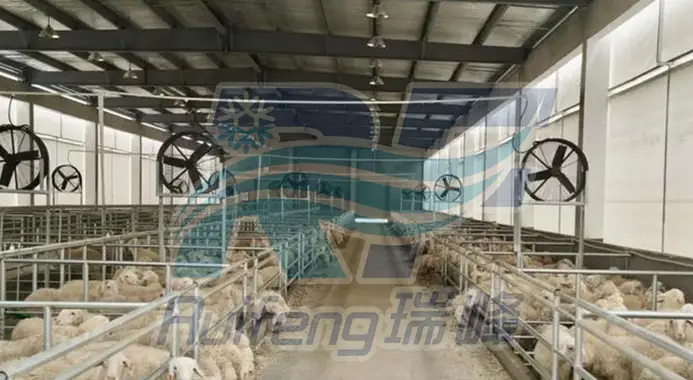
Many farmers mistakenly believe that high-quality equipment alone can solve pen environmental issues. However, equipment is only hardware. On-site shed survey, heat and humidity load calculation, airflow path planning and emission assessment guarantee stable performance. This is why more and more farm owners choose professional industrial cooling equipment service providers, instead of buying separate devices piecemeal. Ordinary distributors only sell products and lack practical experience in livestock projects. They often oversize units and waste cost, or supply equipment with insufficient air volume and deodorizing capacity. Professional service providers carry out site surveys, comprehensively evaluate shed structure, stocking density, distance to nearby residential zones and local environmental regulations, and customize combined solutions to balance cooling, ventilation, odor removal and operating expenses.
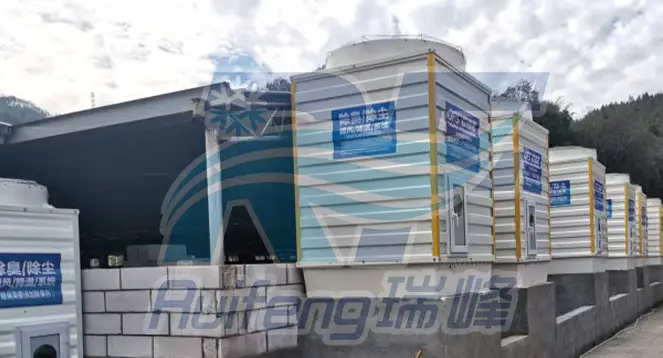
Wenzhou Ruifeng Environmental Protection Refrigeration Equipment Co., Ltd. has abundant completed projects for large-scale livestock farms. It develops differentiated solutions for farms of different sizes. For example, at a large livestock site in Jinjiang, Fujian, the company adopted a combined system of evaporative air coolers + air ducts + negative pressure fans + cooling pads. The air change rate was controlled at 60–80 times per hour. The setup lowered the temperature by 4–8°C and exhausted unpleasant odors within minutes. More importantly, the whole system saves substantial electricity bills every month compared with traditional air conditioners, maximizing performance while minimizing running costs. For another project in Shandong with uneven ceiling heights, Ruifeng avoided oversized equipment and adopted ducted targeted air supply, sending cool air exactly to the active zones of livestock. It relieves heat without wasting energy. This tailor-made approach is the biggest difference between professional service providers and resellers who merely sell equipment.
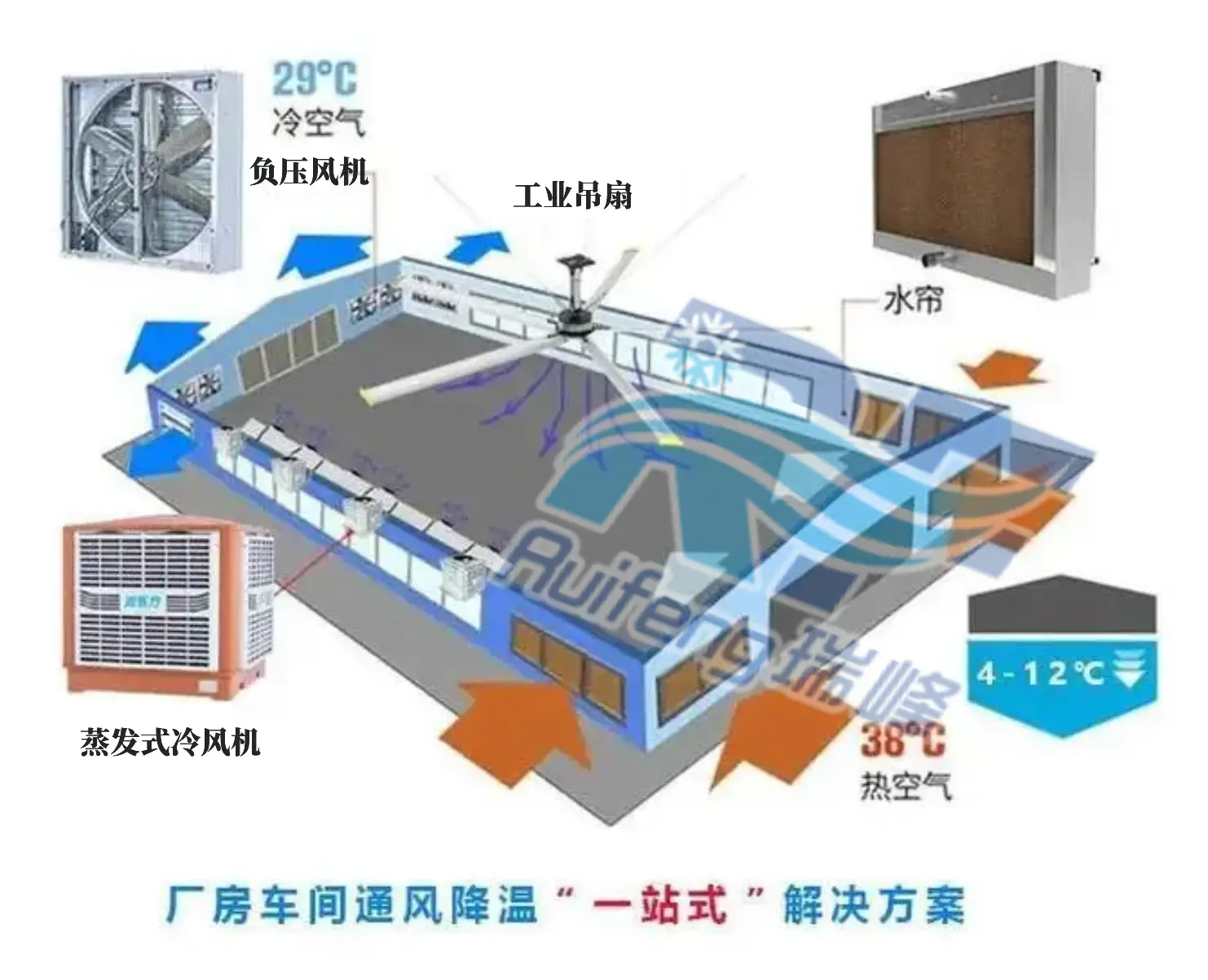
In summary, do not blindly pick a single model when wondering which livestock farm cooling and ventilation equipment to buy. Livestock sheds have complex environments with multiple demands: summer cooling, winter and spring air exchange & deodorization, and environmental compliance. It is better to cooperate with service providers experienced in livestock shed renovation for customized combined ventilation solutions. Proper systems improve pen conditions, reduce livestock sickness rates and lift overall farm revenue. If you are searching for reliable industrial cooling equipment suppliers, manufacturer selection matters a lot! Wenzhou Ruifeng Environmental Protection designs professional customized environmental optimization plans for you. Our one-stop service covers product selection, installation and after-sales support. Feel free to contact us for inquiries!