-
Mobile Version
Scan with Mobile
- Member Center
Foreign Engineering
1、 Analysis of Project Background and Regional Environment
1.1 Project Overview
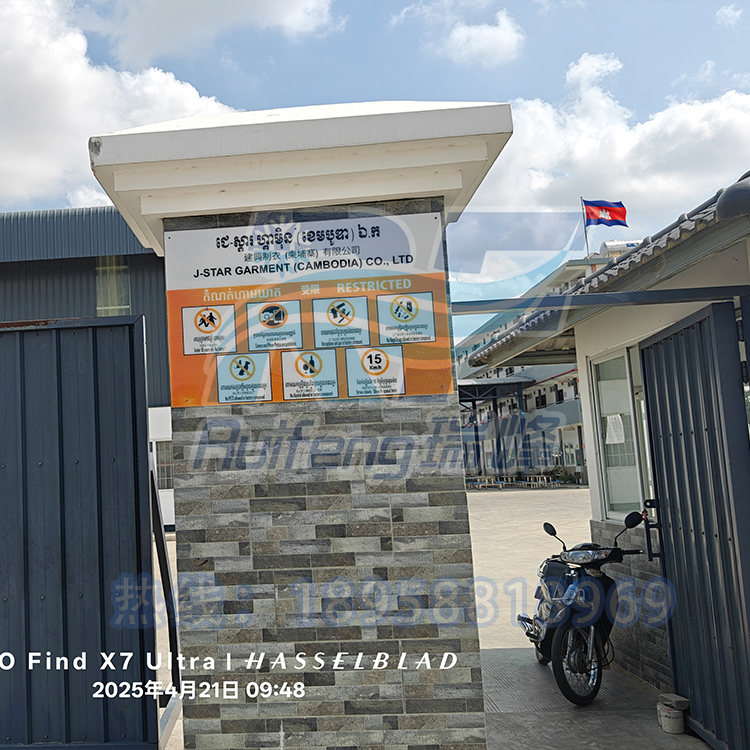
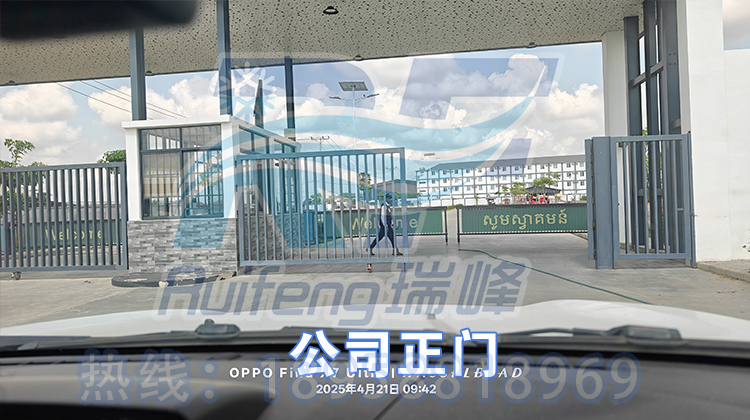
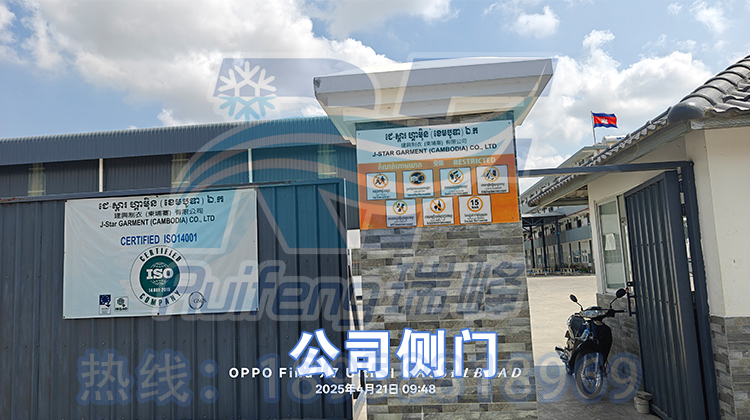
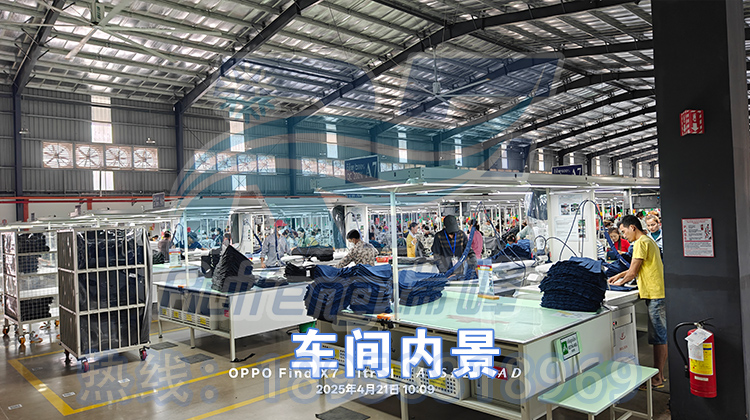
Jianxing Garment (Cambodia) Co., Ltd. (Khmer: ក្រុមហ៊ុនជៀនស៊ីងគារមេន៍) ពុជា) ឯ J-STAR GARMENT (CAMBODIA) CO., LTD. is located in the suburban industrial zone of Phnom Penh, Cambodia. It is a modern clothing enterprise that undertakes international fast fashion brands and orders from Europe, America, Japan, and South Korea. As a typical representative of labor-intensive industries in Cambodia, factories employ a large number of local employees, and the environmental quality of the workshop directly affects production efficiency and employee health.
1.2 Climate and Industrial Background
Phnom Penh has a tropical monsoon climate, which is divided into rainy season (May October) and dry season (November April) throughout the year. The daily average temperature ranges from 28 ℃ to 35 ℃, and the average humidity is over 80%. The high temperature and high humidity environment pose a serious challenge to ventilation and cooling in factories. The Cambodian textile and clothing industry is deeply connected to the Chinese supply chain, benefiting from the cooperation in production capacity between China and Cambodia in terms of fabrics, equipment, and technical management. It belongs to the typical model of "Chinese support+local manufacturing".
2、 Factory Structure and Production Layout
2.1 Architectural Features
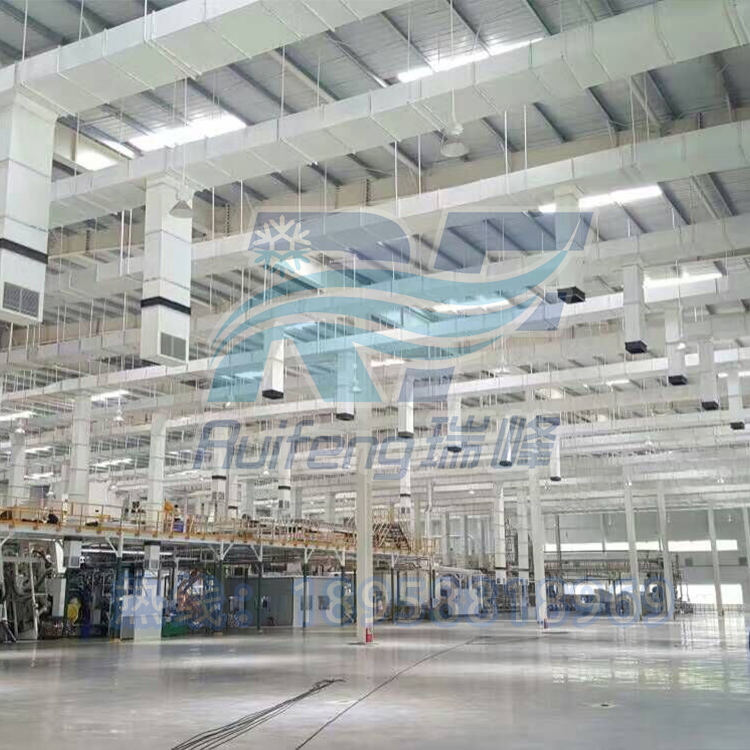
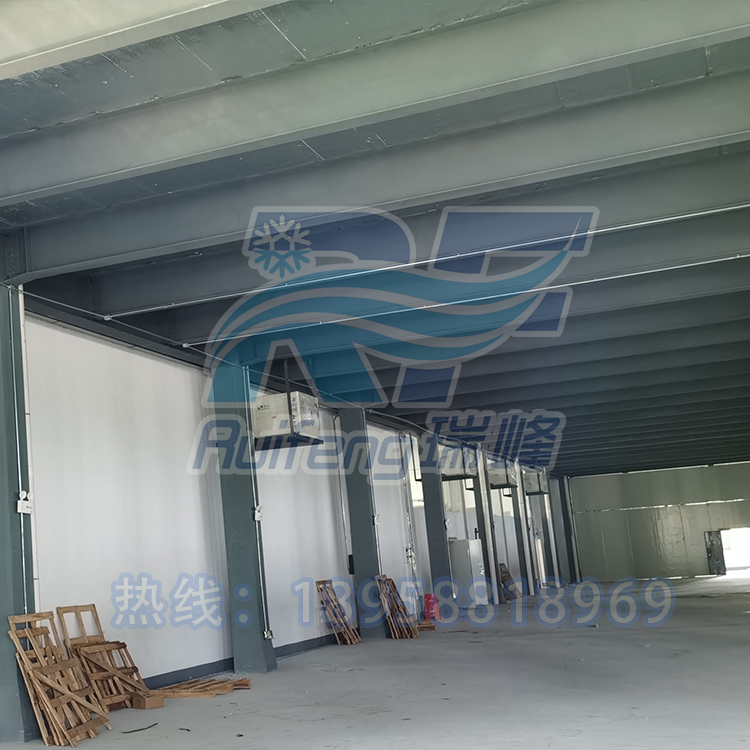
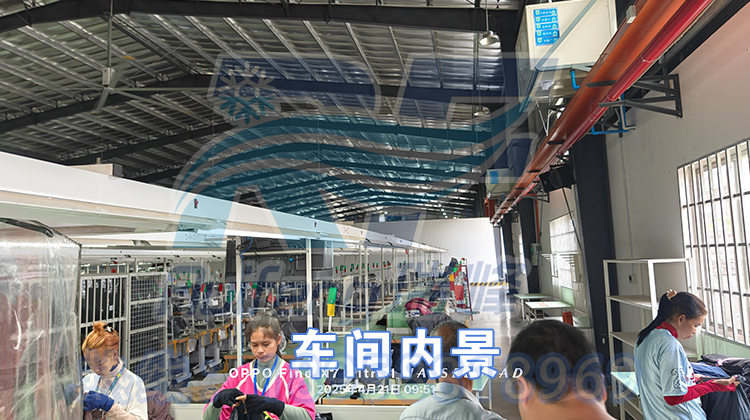
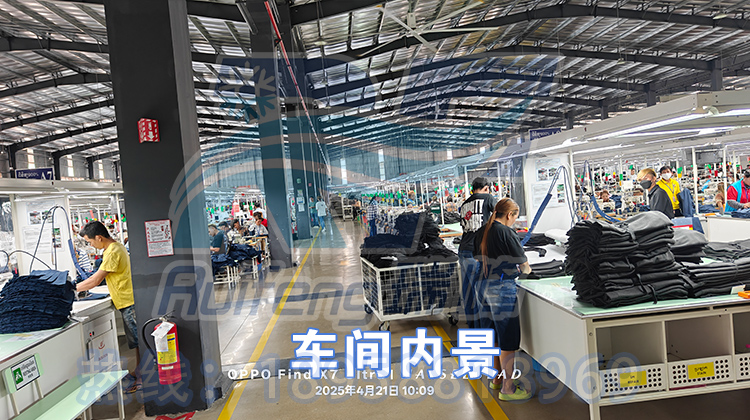
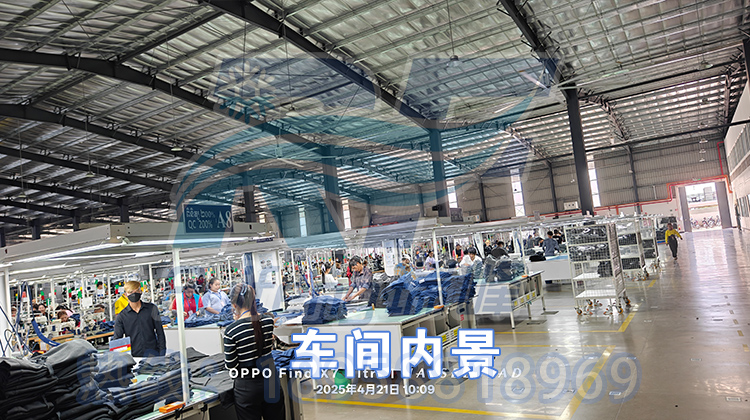
The factory area consists of multiple color steel structure workshops, with a roof made of color steel tiles and walls made of brick structures, with average sealing. The total area of the workshop implemented this time is about 8000 square meters, with a floor height of 10 meters. It is a tall and spacious building, and the cooling capacity is prone to dissipate upwards. Traditional ventilation methods are difficult to achieve effective cooling.
2.2 Production process and workshop zoning
The garment manufacturing process covers:
2.2-1 Cutting area: Fabric cutting and initial processing
2.2-2 Sewing area: the main area for clothing sewing, with dense personnel and high heat generation from the machines
2.2-3 Ironing area: High temperature ironing and shaping operations
2.2-4 Quality Inspection Area: Finished Product Inspection and Repair
2.2-5 Packaging Area: Clothing sorting, labeling, and boxing
Each area is arranged according to the process flow, with the sewing area occupying the largest area and having the most workers, making it a key area for environmental improvement.
2.3 Original ventilation conditions
The workshop was originally equipped with negative pressure fans and high-power industrial ceiling fans, which have basic exhaust capabilities, but cannot achieve temperature regulation. In summer, the indoor perceived temperature remains above 35 ℃ for a long time, and employees are prone to fatigue, heatstroke, and other phenomena, which affects production continuity and quality stability.
3、 Systematic Solution for Ruifeng Environmental Protection Refrigeration
3.1 Comprehensive considerations for design factors
3.1-1 Environmental factors: Tropical climate has high heat load and humidity throughout the year, requiring a balance between cooling and dehumidification;
3.1-2 Building factors: Color steel roofs absorb heat quickly, have high floor heights, high air supply resistance, and uneven distribution of cooling capacity;
3.1-3 Equipment Collaboration: Retain the original negative pressure fan to achieve overall ventilation, and the new system focuses on precise cooling of positions;
3.1-4 Power Conditions: Cambodia's power grid has weak stability and high electricity prices, requiring ultra-low energy consumption design;
3.1-5 Maintenance Convenience: Due to limited local technical resources, the system needs to have high reliability and ease of maintenance.
3.2 Customized System Design
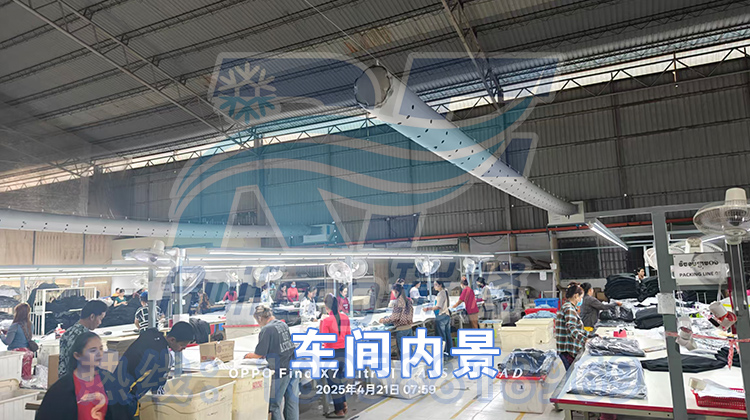
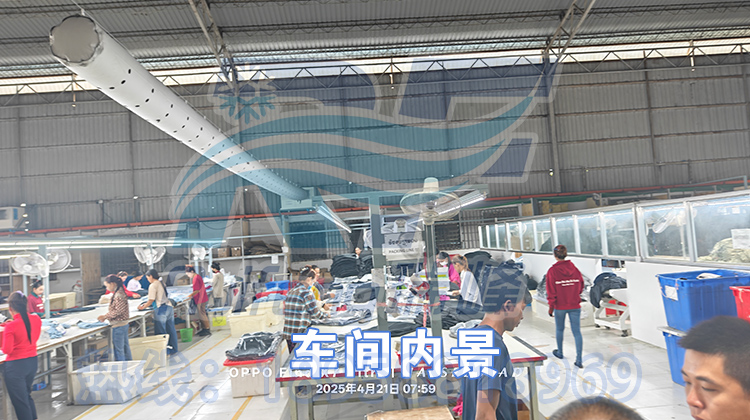
Adopting evaporative cooling+soft air duct fixed-point air supply scheme, the core includes:
3.2-1 High efficiency evaporative cooling air conditioning unit adapted to Cambodian voltage (230V/50Hz);
3.2-2 Anti corrosion soft air duct network, laid along the main channel of the workshop, with air vents accurately corresponding to the workstation area;
3.2-3 Intelligent control system, which can automatically adjust the air supply volume according to the density of personnel and temperature and humidity in the area;
3.2-4 Low water level protection and water quality filtration device, adapted to local water quality conditions, extends equipment life.
3.3 System Operation Characteristics
3.3-1 Significant Energy Saving: Compared to traditional compressors, it saves more than 70% of energy in refrigeration and alleviates local power pressure;
3.3-2 Targeted cooling: Air supply directly covers the employee activity area, achieving "cooling for people rather than space";
3.3-3 Collaborative Enhancement: The original negative pressure fan is responsible for overall ventilation, while the new system provides cool fresh air, forming a composite effect of "overall ventilation+local cooling";
3.3-4 Quick Installation: Modular structure, complete full line installation and debugging within two weeks, without affecting production plans.
4、 Implementation effect and customer feedback
4.1 Improvement of environmental indicators
After the system was put into operation, the temperature in the job area decreased by 5 ℃ -8 ℃, the relative humidity decreased by 15% -20%, and the employee work area remained within a comfortable range of 28 ℃ -30 ℃.
4.2 Win win situation of production efficiency and humanistic care
The employee turnover rate has decreased, work focus has increased, and the daily output of sewing machines has increased by about 12%;
The occupational health problems such as heatstroke and dizziness have significantly decreased, and employee satisfaction has significantly improved;
The overall improvement of the workshop environment has become a highlight project for the owner to receive customer visits.
4.3 Owner Evaluation
Ruifeng not only provides a set of equipment, but also an overall environmental solution suitable for tropical factories. The electricity bill has not increased significantly, but employees are saying 'it's much better now', which is crucial for us to maintain production capacity and attract workers
5、 Project significance and industry insights
Cambodia and most Southeast Asian countries are currently in a stage of rapid industrialization, with widespread problems such as weak factory infrastructure, tight power resources, and high temperature and humidity environments affecting production. The successful practice of this project has shown that:
5.1 Strong adaptability of Chinese technology: The ability to customize for different countries' voltage, climate, and building characteristics is a key advantage for China's manufacturing industry to go global;
5.2 Energy saving technology is the core competitiveness: In areas with high energy costs, energy-saving air conditioning is not only an environmental equipment, but also a tool for controlling production costs;
5.3 Systematic thinking is crucial: ventilation and cooling are not simply about installing equipment, but should be integrated with building structure, existing systems, personnel flow, and local resources for design.
Relying on the experience accumulated in many domestic industrial scenarios, Ruifeng Environmental Protection Refrigeration is exporting efficient, energy-saving and reliable ventilation and cooling solutions to countries along the "the Belt and Road" to help local industries improve environmental quality and sustainable development capacity.
More cases