-
Mobile Version
Scan with Mobile
- Member Center
Foreign Engineering
1、 Project Background and Factory Overview
The garment factory is located in a large industrial park on the outskirts of Phnom Penh, Cambodia, in a tropical monsoon climate zone with high temperatures and humidity throughout the year. The average temperature during the dry season reaches 30-35 ℃, and the humidity during the rainy season often exceeds 80%. The humid and hot environment poses significant challenges to the operation of personnel and equipment in the production workshop. As one of the pillar industries in Cambodia, the garment industry has long undertaken the transfer of China's textile and clothing industry chain, forming a labor-intensive industry model and becoming an important area of production capacity cooperation between China and Cambodia.
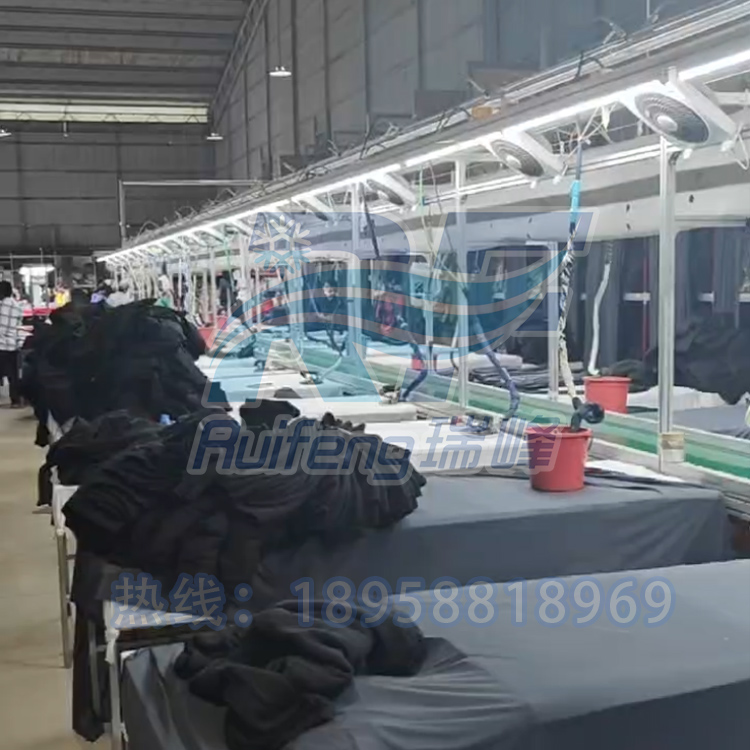
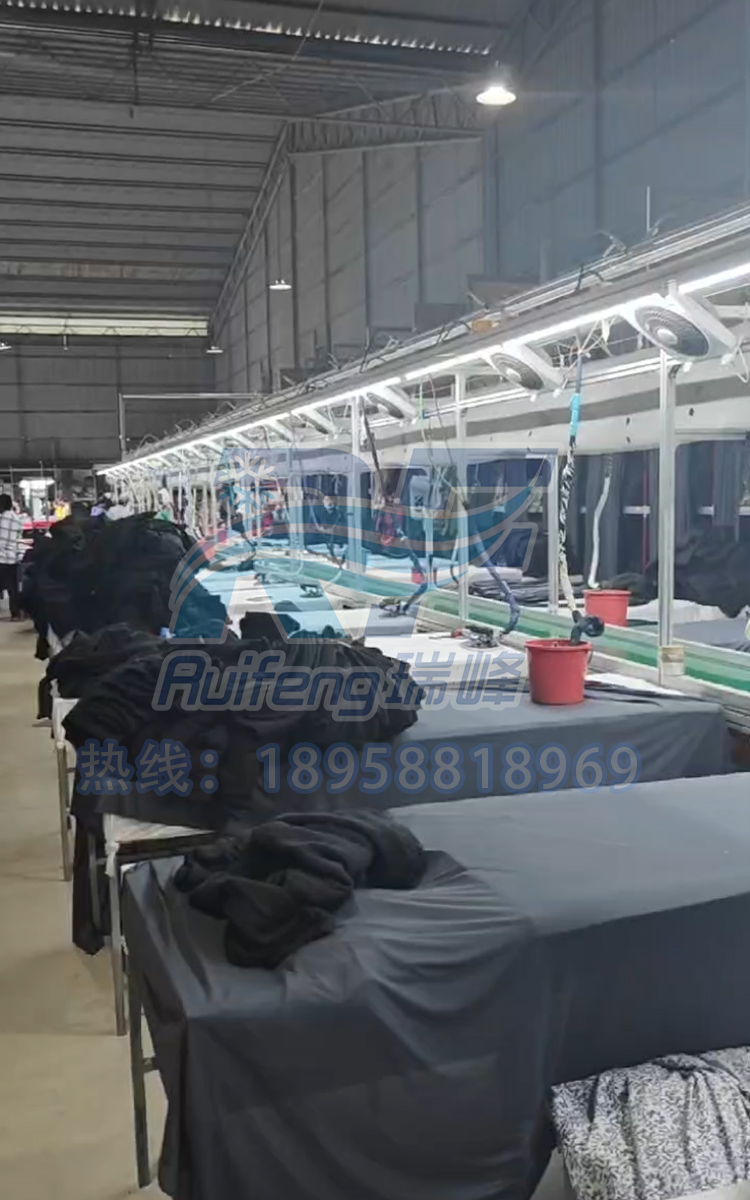
The factory area is a typical color steel structure factory building, with a roof made of color steel tiles and surrounded by brick walls. The overall sealing is average. The total area of the workshop is about 20000 square meters, with a floor height of 12 meters. The interior is divided into cutting area, sewing area, ironing area, quality inspection area, and packaging area according to the production process, covering various types of workers such as cutting workers, sewing workers, ironing workers, and quality inspectors. The personnel is dense and the mobility is high.
2、 Core challenge: High temperature and high humidity environment in the ironing area
The ironing process requires continuous use of high-temperature steam equipment, resulting in significantly higher temperature and humidity in this area compared to other parts of the workshop. Due to the lack of physical partitions inside the factory building, hot and humid air is prone to spread to adjacent sections, which not only affects employee comfort but also restricts overall production efficiency. How to achieve precise local cooling and dehumidification in open large spaces has become a key issue that needs to be addressed in this project.
3、 Ruifeng customized solution
Based on comprehensive research on geographical climate, factory structure, energy conditions, and production lines, the Ruifeng technical team focuses on the following dimensions for scheme design:
(1) Thermal analysis of buildings: The thermal insulation performance of color steel roofs and brick wall structures is weak, and the sealing of the factory building is insufficient, resulting in significant cooling loss;
(2) Space airflow organization: Open workshops need to plan the air supply path reasonably to avoid mixing of hot and cold airflows;
(3) Localized adaptation: The voltage of the Cambodian power grid is 230V/50Hz, which is different from the Chinese standard, and the local power supply is unstable. High energy efficiency and low-power equipment should be prioritized;
(4) Cost and maintenance: Considering the limited local technical resources, the plan needs to balance equipment reliability and ease of operation and maintenance.
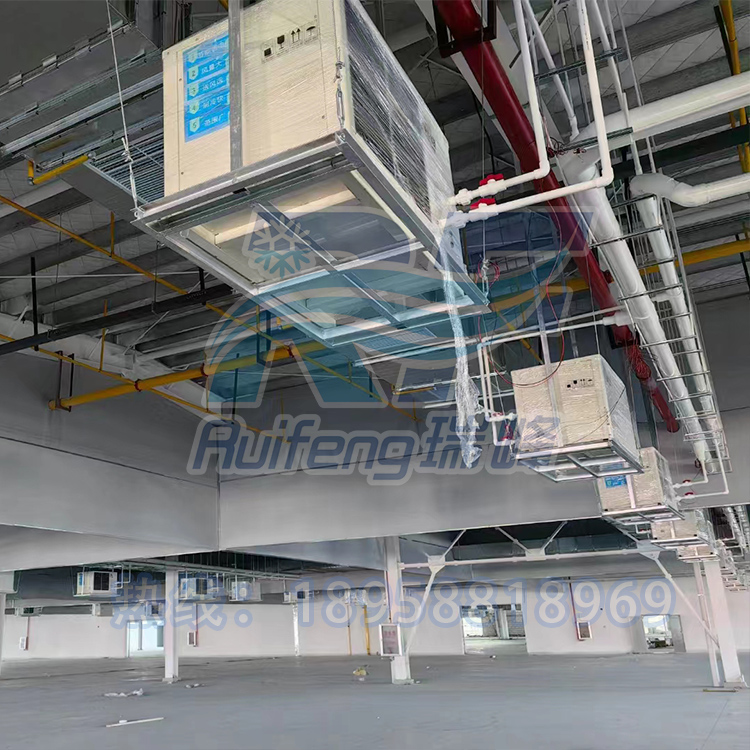
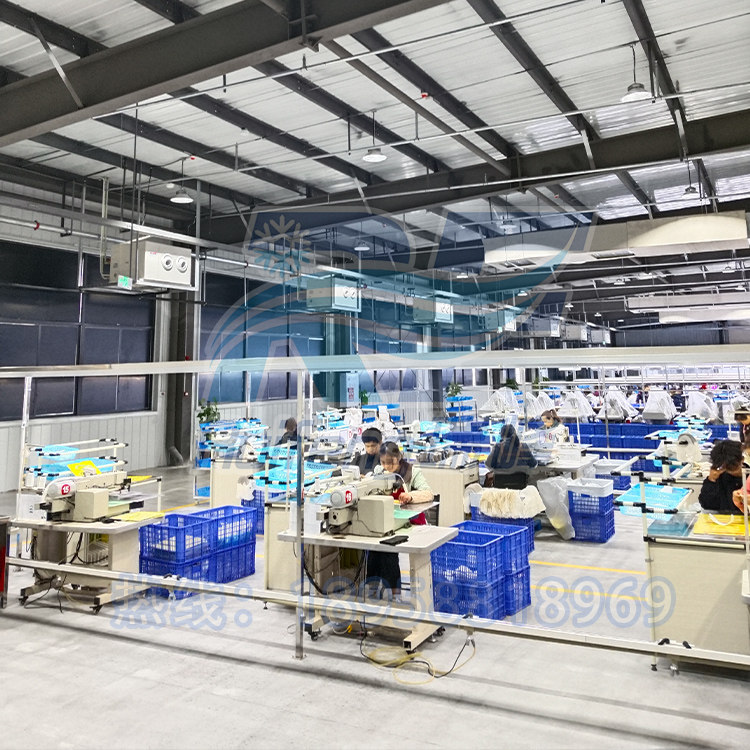
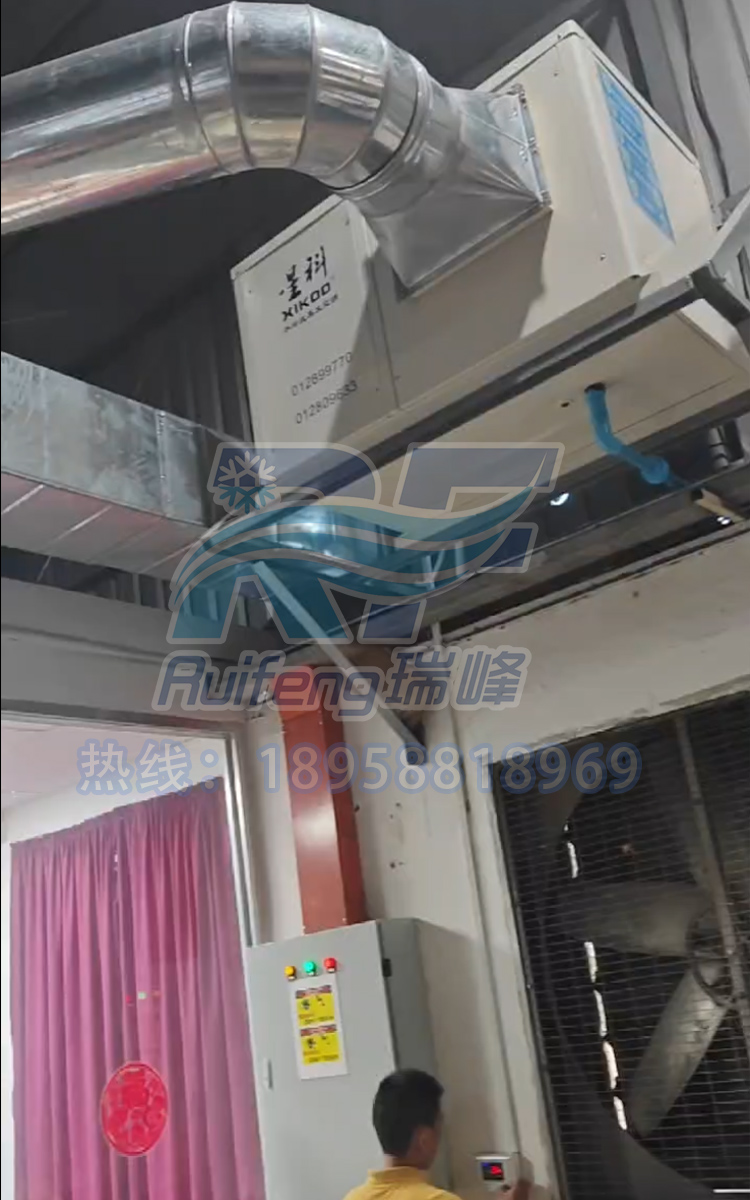
Final solution: Adopt a customized horizontal duct evaporative cooling industrial air conditioning system, and design fixed-point air supply according to the distribution of ironing area positions. The equipment motor and control system are both compatible with Cambodian voltage standards, and energy-saving operation is achieved through frequency conversion technology and efficient evaporation filters, significantly reducing energy consumption load.
4、 Engineering effectiveness and customer feedback
After the system was put into use, the temperature in the ironing area decreased by 8-12 ℃, the relative humidity decreased by about 30%, and the comfort level of the staff was significantly improved. The cool and dry working environment not only reduces employee fatigue, but also improves the efficiency of the ironing process by about 15%, and the product rework rate decreases synchronously. The management of the factory highly recognizes the design concept of "precise air supply, high efficiency and energy saving" of the Ruifeng team, and this project has become a demonstration case of sustainable factory upgrading in the park.
5、 Industry Outlook: China's Solution Helps Southeast Asia's Industrial Upgrading
Currently, many Southeast Asian countries are in the stage of accelerated industrialization, and their factory conditions, climate characteristics, and energy structure are similar to China's development path decades ago. Many labor-intensive industries face common challenges such as high temperatures and humidity, power shortages, and inadequate infrastructure. However, the local area often lacks professional environmental control technology and supply chain support.
Ruifeng Environmental Protection Refrigeration relies on China's mature manufacturing system and engineering experience to export efficient, customizable, and easy to maintain ventilation and cooling solutions to Cambodia and surrounding markets, helping local industries achieve dual improvement in production environment and energy efficiency management. In the future, we are willing to continue to inject green momentum into the industrial modernization of countries along the "the Belt and Road" with "China's technology" and "China's plan".
More cases