


专注大空间环境问题解决方案
提供专业通风降温工程方案设计,一站式通风降温工程施工安装服务
【项目背景与挑战】
该项目位于我国北方地区。这里四季分明,夏季虽短暂但气温高、湿度低,冬季则寒冷漫长。对于肉联加工行业而言,屠宰环节是决定肉品卫生安全与品质的关键第一步。一旦车间内通风不畅,不仅会严重影响员工的工作环境,更可能因卫生条件不达标而威胁食品安全。
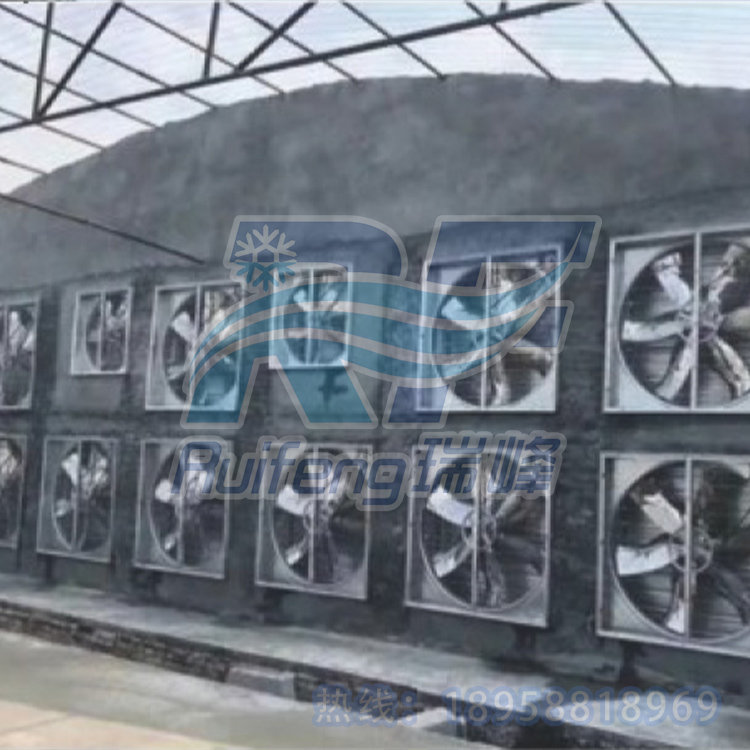
该屠宰车间为一栋大平层大棚式结构,空间高大通透。在屠宰过程中,猪只烫毛、开膛等工序会产生大量热气、浊气和水蒸气,这些混合气体若不及时排出,将迅速弥漫整个车间,形成闷热、潮湿且伴有异味的恶劣环境。这不仅对一线操作人员的生理与心理造成极大负担,也显著增加了病菌滋生和交叉污染的风险。因此,实现高效、彻底的通风换气,是保障生产顺利进行、守护食品安全的当务之急。
【屠宰工艺流程简介】
该车间主要负责屠宰前段工序,具体流程如下:
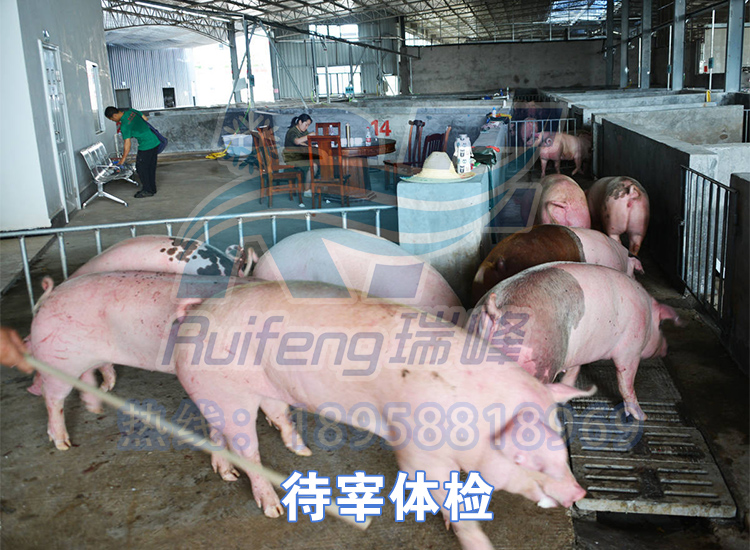
1、宰前准备与检验:所有进场的猪只必须接受官方检验员的严格“体检”,核对检疫证明并抽检违禁物质。随后,猪只在待宰圈休息、冲淋,以减轻应激反应,确保肉品风味。
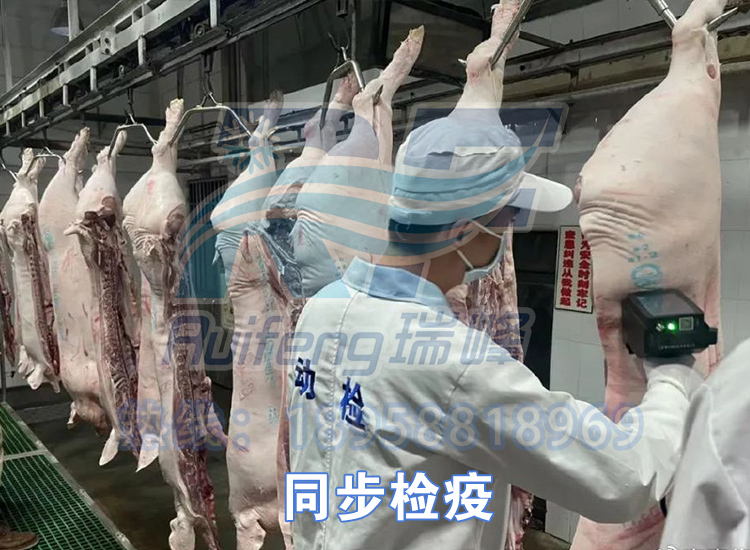
2、屠宰与同步检疫:这是整个工厂的核心区,严格遵循“脏净分离”原则以防止交叉污染。
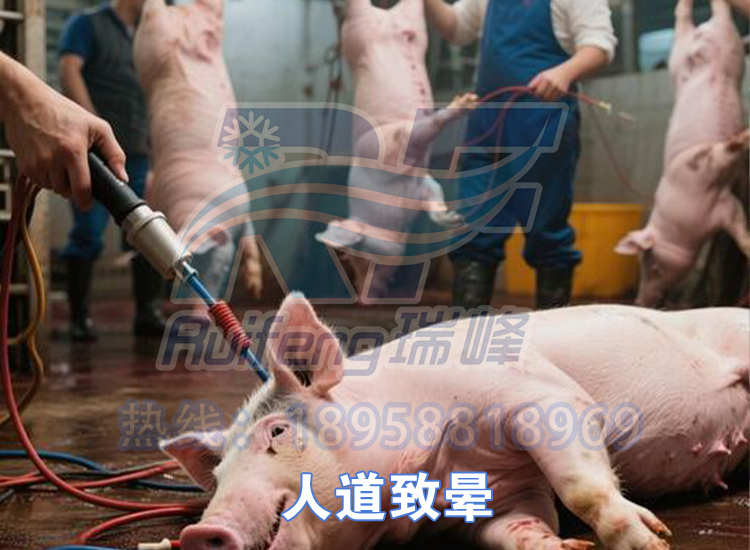
3、人道致晕:采用国际公认的二氧化碳致晕技术,让猪在无痛状态下进入工序。
4、刺杀放血与清洗:致晕后立即上吊放血,并经过浸烫刨毛和火焰燎毛环节,将猪身处理干净。
5、开膛与同步检疫:工人开膛取出内脏,此时内脏和胴体同步传输,检疫员会仔细检查头部、内脏和胴体,一旦发现病变立即剔除。
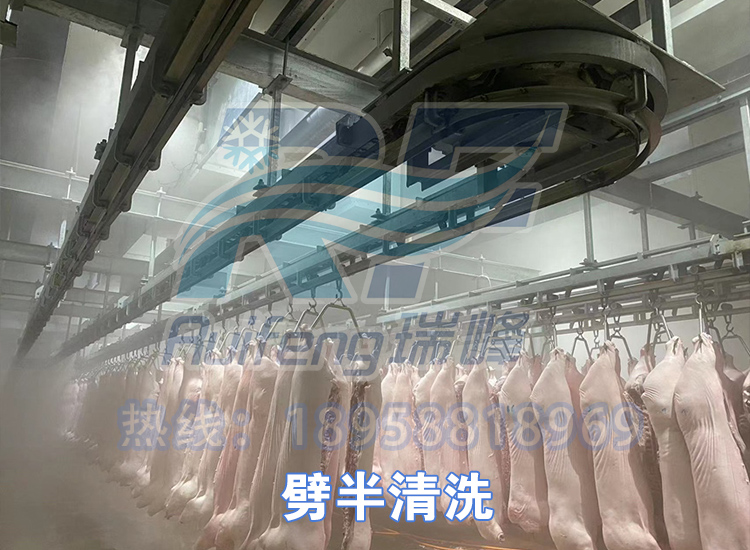
6、劈半与冲洗:检疫合格的胴体被自动劈半机精准劈成两半,经高压清洗并盖上检疫合格章后,进入下一环节。
7、工序划分:该车间只负责屠宰工序,后续的排酸、冷却、分割与出厂由隔壁的冷冻车间完成。因此,本车间的主要需求是全面通风换气,而非降温。
【瑞峰解决方案:永磁负压风机通风布局设计】
针对该项目的特殊需求,瑞峰环保制冷的技术团队进行了深入的综合分析:
1、地理位置:项目位于北方,考虑初期投资与运营成本,无需配备复杂的制冷设备。
2、建筑结构:车间为大平层、高大通透结构,非常适合利用负压原理进行整体换气。
3、生产工艺:车间仅产生热气、浊气,无特殊降温需求,核心目标是快速排出污浊空气,引入新鲜空气,解决闷热问题。
4、成本控制:相较于空调、冷风机等降温设备,负压通风方案的投资成本更低,且运行能耗小,能为客户节省大量长期运营费用。
基于以上考量,我们为该车间量身定制了永磁负压风机通风系统。
【方案优势与技术原理】
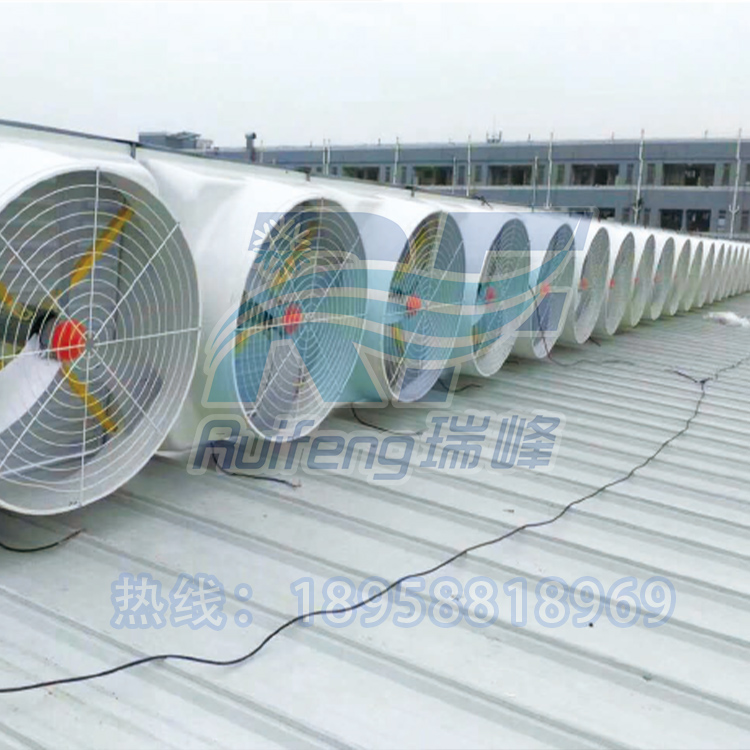
我们选用的永磁负压风机,是新一代高效节能的通风设备。其工作原理是利用风机强大的抽风能力,将室内的高温、浑浊空气迅速强制排出室外,从而使室内形成“负压区”。在气压差的作用下,室外的新鲜空气会通过门窗等自然开口被“吸”入室内,形成持续、柔和的对流新风,从根本上解决了室内闷热、异味聚集的问题。
相比传统风机,本方案具有显著优势:
1、核心电机:采用永磁电机,相比传统电机,能效更高,省电节能效果显著。
2、优质材质:风机主体采用铝合金材质,防腐防锈,能长期耐受屠宰车间潮湿且具有一定腐蚀性的环境;支架则采用玻璃钢材质,减震稳固,确保设备长期稳定运行。
3、智能控制:配套的变频器智能控制系统,可根据车间内实际浊气浓度和天气情况,灵活调节风机的转速与风量,实现按需通风,进一步优化能耗。
【项目成效与客户反馈】
系统启用后,效果立竿见影:
1、环境改善:屠宰过程中产生的热气、水汽和异味被迅速排至室外,车间内空气变得清新、干爽。
2、异味消除:以往令人不适的“屠宰味”基本消失,工作环境得到根本性改善。
3、人员舒适:员工在舒适的新风环境中工作,体感温度明显下降,工作积极性与生产效率均得到提升。
【业务延伸与能力证明】
瑞峰环保制冷此次圆满完成的屠宰车间通风项目,再次证明了我们处理特殊空间、特殊行业要求场景的卓越能力。这种负压通风方案不仅适用于屠宰车间,同样可广泛应用于养殖场、食品加工车间、大型仓储、工业厂房、温室大棚等几乎所有需要大面积通风降温的高大空间。
我们不仅提供设备,更专注于根据客户的建筑特点、工艺需求与预算,进行综合设备选型与个性化方案设计。无论环境多么复杂,瑞峰都能为您提供专业、可靠、高性价比的环境改善解决方案。
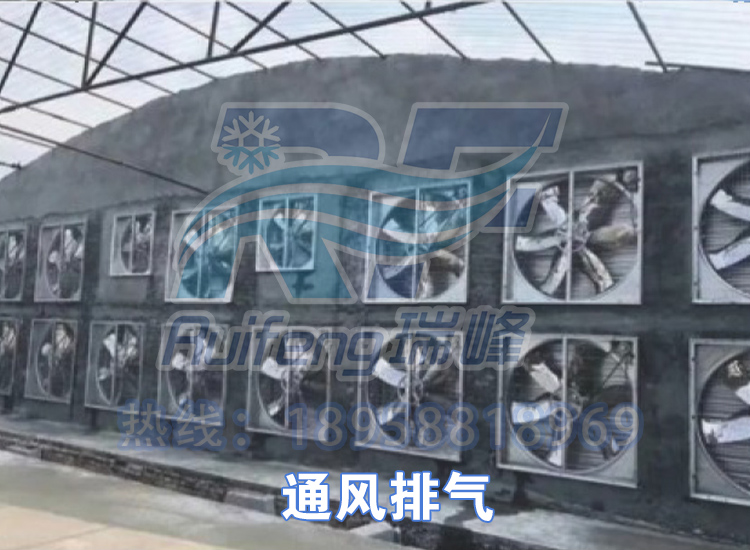
Ventilation and cooling project of permanent magnet negative pressure fan in a large slaughterhouse in the north
Project Background and Challenges
This project is located in the northern region of China. The four seasons here are distinct. Although summer is short, the temperature is high and the humidity is low, while winter is cold and long. For the meat processing industry, the slaughter process is the crucial first step in determining the hygiene, safety, and quality of meat products. Once the ventilation in the workshop is poor, it will not only seriously affect the working environment of employees, but also pose a threat to food safety due to inadequate hygiene conditions.
The slaughterhouse is a large flat greenhouse structure with a spacious and transparent space. During the slaughtering process, processes such as scalding and cutting open pigs produce a large amount of hot, turbid, and steam. If these mixed gases are not discharged in a timely manner, they will quickly diffuse throughout the entire workshop, creating a harsh environment that is hot, humid, and accompanied by odors. This not only imposes a great physical and psychological burden on frontline operators, but also significantly increases the risk of bacterial growth and cross contamination. Therefore, achieving efficient and thorough ventilation is the top priority to ensure smooth production and safeguard food safety.
Introduction to Slaughtering Process Flow
The workshop is mainly responsible for the pre slaughter process, and the specific process is as follows:
1. Pre slaughter preparation and inspection: All pigs entering the site must undergo strict "physical examination" by official inspectors, verify quarantine certificates, and randomly inspect prohibited substances. Subsequently, the pigs rest and wash in the waiting area to alleviate stress reactions and ensure the flavor of the meat.
2. Slaughtering and synchronous quarantine: This is the core area of the entire factory, strictly following the principle of "clean and dirty separation" to prevent cross contamination.
3. Human induced dizziness: Using internationally recognized carbon dioxide induced dizziness technology, pigs can enter the process in a painless state.
4. Assassination, bloodletting, and cleaning: After fainting, immediately hang the pig and let it bleed. After soaking, scalding, planing, and flame burning, clean the pig body.
5. Ripping and synchronous quarantine: Workers cut open and remove internal organs, and at this time, the internal organs and body are transported synchronously. The quarantine officer will carefully inspect the head, internal organs, and body, and immediately remove any lesions found.
6. Splitting and rinsing: The carcass that has passed quarantine inspection is accurately split into two halves by an automatic splitting machine. After high-pressure cleaning and stamping with the quarantine qualification seal, it enters the next stage.
7. Process division: This workshop is only responsible for the slaughter process, and the subsequent acid removal, cooling, segmentation, and factory delivery are completed by the adjacent refrigeration workshop. Therefore, the main requirement of this workshop is comprehensive ventilation and air exchange, rather than cooling.
Ruifeng Solution: Ventilation Layout Design of Permanent Magnet Negative Pressure Fan
In response to the special requirements of this project, the technical team of Ruifeng Environmental Protection Refrigeration conducted an in-depth comprehensive analysis:
1. Geographical location: The project is located in the north, and considering the initial investment and operating costs, there is no need to equip complex refrigeration equipment.
2. Building structure: The workshop is a large flat and tall transparent structure, which is very suitable for using negative pressure principle for overall ventilation.
3. Production process: The workshop only produces hot and humid air, without special cooling requirements. The core goal is to quickly exhaust polluted air, introduce fresh air, and solve the problem of stuffiness.
4. Cost control: Compared to cooling equipment such as air conditioners and air coolers, negative pressure ventilation solutions have lower investment costs and lower operating energy consumption, which can save customers a lot of long-term operating expenses.
Based on the above considerations, we have customized a permanent magnet negative pressure fan ventilation system for this workshop.
Advantages and Technical Principles of the Solution
The permanent magnet negative pressure fan we have chosen is a new generation of high-efficiency and energy-saving ventilation equipment. Its working principle is to use the powerful exhaust capacity of the fan to quickly and forcibly discharge the high temperature and turbid air indoors, thereby forming a "negative pressure zone" indoors. Under the action of air pressure difference, fresh outdoor air will be "sucked" into the room through natural openings such as doors and windows, forming continuous and gentle convective fresh air, fundamentally solving the problems of stuffiness and odor accumulation indoors.
Compared to traditional fans, this solution has significant advantages:
1. Core motor: Adopting permanent magnet motor, it has higher energy efficiency and significant energy-saving effect compared to traditional motors.
2. High quality material: The fan body is made of aluminum alloy material, which is corrosion-resistant and rust proof, and can withstand the humid and corrosive environment of the slaughterhouse for a long time; The bracket is made of fiberglass material, which provides shock absorption and stability, ensuring long-term stable operation of the equipment.
3. Intelligent control: The matching frequency converter intelligent control system can flexibly adjust the speed and air volume of the fan according to the actual concentration of turbid air and weather conditions in the workshop, achieving on-demand ventilation and further optimizing energy consumption.
Project effectiveness and customer feedback
After the system is enabled, the effect is immediate:
1. Environmental improvement: The heat, moisture, and odors generated during the slaughter process are quickly discharged outdoors, making the air in the workshop fresh and dry.
2. Odor elimination: The previously uncomfortable "slaughter smell" has basically disappeared, and the working environment has been fundamentally improved.
3. Personnel comfort: Employees working in a comfortable fresh air environment experience a significant decrease in perceived temperature, resulting in improved work motivation and production efficiency.
Business Extension and Capability Proof
The successful completion of the slaughter workshop ventilation project by Ruifeng Environmental Protection Refrigeration once again proves our outstanding ability to handle special spaces and industry requirements scenarios. This negative pressure ventilation scheme is not only suitable for slaughterhouses, but can also be widely applied to almost all tall spaces that require large-scale ventilation and cooling, such as breeding farms, food processing workshops, large warehouses, industrial plants, greenhouses, etc.
We not only provide equipment, but also focus on comprehensive equipment selection and personalized solution design based on customers' building characteristics, process requirements, and budgets. No matter how complex the environment is, Ruifeng can provide you with professional, reliable, and cost-effective environmental improvement solutions.
更多案例

客服热线:18958818969
服务热线:13356130717
电子邮件:ruifeng0717@163.com
公司地址:浙江省温州市平阳县万全镇紫来创业园二幢
瑞峰官网:www.wzrfhb.com



长按屏幕识别二维码
打开手机扫描二维码